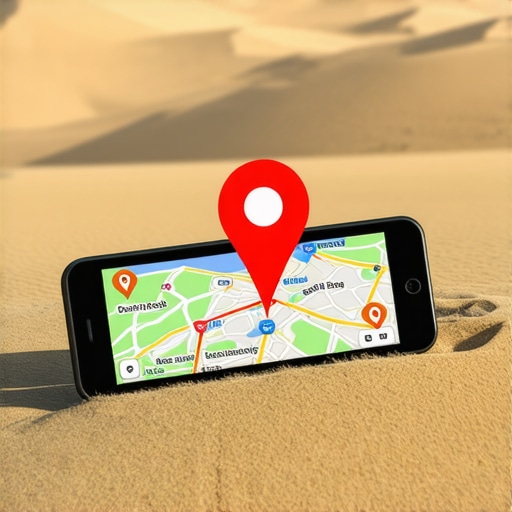
3 Reasons Your Map Pin Is Stuck in the Desert Despite Great Reviews
You’ve done everything “by the book.” You’ve provided stellar service to your clients, and they’ve rewarded you with a wall of five-star reviews. Your Google Business Profile (GBP) is a testament to your hard work, boasting a 4.9-star average with 150+ glowing testimonials. Yet, when you search for your services from a few miles away – or even a few blocks away – your business is nowhere to be found in the coveted Google Map Pack. You’re stuck in the “ranking desert,” relegated to page two or three, while competitors with fewer reviews and worse ratings bask in the glory of the top three spots.
As a Local SEO Consultant and Google Business Profile Product Expert, I see this paradox every day. Business owners are understandably frustrated. They feel like the algorithm is broken or biased. But here is the cold, hard truth of the 2026 local search landscape: Reviews are social proof, not a ranking engine. While they are a component of the algorithm, they are only one small piece of a much larger, more complex puzzle. If you want to rank google business profile effectively, you have to look beyond the stars.
In this deep dive, we are going to look at the three primary reasons your pin is invisible and how to navigate the technical requirements of google business profile seo to finally dominate the Las Vegas market – or whichever “desert” you currently find yourself in. To understand why you’re stuck, we must first understand the three pillars of the local algorithm: Proximity, Relevance, and Prominence.
Reason #1: You’ve Fallen Victim to the Proximity Filter (and the “Ghost” Filter)
Proximity is the most literal part of the Google Maps algorithm. It accounts for approximately 15% of the ranking weight, but its “veto power” is immense. Google’s primary goal is to provide the most convenient solution to the user. If a user is searching for “plumber near me,” Google will prioritize the plumber closest to the user’s physical location at that exact moment. This creates what I call the “Parking Lot Effect” – you only rank when the searcher is standing in your parking lot.
However, in 2026, proximity has become even more nuanced. We are now dealing with the “Ghost Filter” (an evolution of the Possum update). Google’s algorithm is designed to provide variety. If there are five law firms in the same office building or three HVAC companies on the same block, Google will often “filter out” the ones it deems less relevant or prominent to avoid monopolizing the Map Pack with businesses from a single location. If your business is being filtered, you are effectively a ghost; you exist, but you’re invisible because Google thinks it has already satisfied the user’s intent with a nearby neighbor.
Furthermore, the 2026 algorithm has placed a massive emphasis on “Openness.” If your business hours indicate you are closed at the time of the search, your proximity “reach” shrinks significantly. Google doesn’t want to send a user to a closed door. This real-time proximity adjustment means your rankings can fluctuate wildly throughout the day. If you haven’t mastered your google maps rank tracker data to see these shifts, you’re flying blind. You need to understand Fix the Proximity Loop: Why Your Google Maps Vegas Pin Only Shows Next Door to break out of this hyper-local cage.
For Service Area Businesses (SABs) that don’t have a physical storefront, the proximity filter is even more brutal. Without a physical pin that Google can verify against real-world traffic patterns, your “reach” is often capped by the zip code of your registered address. This is why many businesses find that Why Your Vegas Shop Only Ranks for One Zip Code [2026 Fixes] is the most common complaint in local SEO today.
Reason #2: Your Relevance Signals Are Mismatched or Diluted
Relevance accounts for roughly 25% of your ranking potential. It is the measure of how well your business profile matches what a user is looking for. Most business owners think relevance starts and ends with picking the right “Primary Category” on their Google Business Profile. While that is the bedrock, it is far from the whole story. In the era of google business profile optimization, relevance is about “Entity Matching.”
Google doesn’t just see your business as a name and a category; it sees it as an entity in a vast Knowledge Graph. If your website, your social profiles, and your GBP aren’t sending a unified signal about what you do and where you do it, your relevance score drops. One of the biggest mistakes I see is “Category Dilution.” This happens when a business adds ten secondary categories in hopes of showing up for everything. In reality, this often confuses the algorithm, weakening your authority for your primary service. You want to be the obvious choice for a specific query, not a “maybe” for twenty different ones.
Your website plays a massive role here. Google “crawls” the website linked to your GBP to find justification for ranking you. If your GBP says you are a “Personal Injury Lawyer” but your website’s homepage is a generic mess of “Legal Services,” you have a relevance gap. To fix this, you need a local content strategy that goes beyond generalities. Your blog shouldn’t just talk about “how to fix a leak”; it should talk about “fixing pipe bursts in Summerlin” or “the impact of Las Vegas hard water on plumbing.” This hyper-local context tells Google that you are not just a plumber, but a Las Vegas plumber.
Technical relevance is also fueled by structured data. If you haven’t implemented LocalBusiness Schema, you are leaving your relevance to chance. You need to check out The Schema Fix That Finally Puts Your Vegas Business on the Map to understand how to feed Google the exact coordinates, service areas, and entity IDs it needs to categorize you correctly. Without this, your google maps marketing efforts will always hit a glass ceiling.
Reason #3: Your Prominence Lacks Local Authority and Technical Depth
This is the heavy hitter. Prominence accounts for a staggering 60% of the ranking algorithm. This is where most businesses fail, and it’s where the “Great Review Myth” dies. Prominence is Google’s way of measuring how important your business is in the digital and physical world. Reviews are a part of prominence, but they are only the surface layer.
True prominence is built on three pillars: Citations, Local Backlinks, and Engagement Metrics. If you want to rank higher on google maps, you need to dominate all three.
The Citation and NAP Myth
In the past, local SEO was just about “NAP” (Name, Address, Phone) consistency across the web. While consistency still matters, the sheer volume of low-quality citations no longer moves the needle. In 2026, Google looks for “unstructured citations” – mentions of your business on local news sites, neighborhood blogs, and community forums. If the only places your business is mentioned are generic directories like Yellow Pages, your prominence is weak. You need a google business profile audit tool like the one found at SEO Viper Tools to identify where your digital footprint is lacking.
The Power of Local Backlinks
Backlinks are still the currency of the internet, but for google maps ranking, the locality of the link matters more than the authority of the domain. A link from the Las Vegas Chamber of Commerce or a local high school football team’s sponsorship page is worth ten times more than a guest post on a generic national tech blog. These local links anchor your business to a specific geography in Google’s mind. They prove that you are a prominent fixture in the community, not just a digital storefront.
Engagement: The “Invisible” Ranking Factor
Google tracks how users interact with your profile. This is the “dwell time” of the Map Pack. Do users click to call? Do they request directions? Do they spend time looking at your photos? Do they expand your “Updates” (formerly Google Posts)? If users see your profile but don’t interact with it, Google assumes your business isn’t a prominent or desirable result. High-quality imagery, frequent updates, and answering every Q&A on your profile are essential for increasing these engagement signals. If you aren’t tracking these, you need to see 5 Data Points Your Las Vegas SEO Report Must Show in 2026 to ensure you’re measuring what actually matters for google maps lead generation.
The 2026 Roadmap: How to Move Your Pin Out of the Desert
Escaping the ranking desert isn’t about one single trick; it’s about a holistic local seo strategy. If your reviews are great but your rankings are poor, follow this checklist to diagnose and fix the issue:
- Audit Your Categories: Ensure your Primary Category is the one with the highest search volume for your main service. Remove unnecessary secondary categories that might be diluting your relevance.
- Fix the “Ghost Filter”: If you share an office or are in a dense area, you must differentiate your profile. Use unique, high-resolution photos that show your signage and interior to prove your physical presence.
- Implement Advanced Schema: Use JSON-LD to tell Google exactly which neighborhoods you serve. Don’t just list “Las Vegas”; list “Henderson,” “Spring Valley,” and “North Las Vegas” within your website’s code.
- Use a Professional google business profile seo Tool: You cannot fix what you cannot measure. Use a tool that provides a “grid search” to see exactly where your rankings drop off. If you rank #1 in your office but #20 two blocks away, you have a proximity and prominence problem.
- Hyper-Local Link Building: Stop chasing national backlinks. Reach out to local charities, business associations, and local news outlets to get mentions and links that reinforce your geographic authority.
- Address the “Verification Loop”: If your pin is drifting or your profile keeps getting flagged for “Quality Issues,” it’s often a sign that your underlying data (website, citations, and GBP) are mismatched. Align them perfectly to stabilize your ranking.
By focusing on these technical pillars, you can implement 3 Google Maps Vegas Hacks to Beat the ‘Ghost’ Filter in 2026 and finally see the ROI from your hard-earned reviews. Remember, local search engine optimization is a marathon of precision, not a sprint of volume.
Conclusion: Beyond the Stars
Reviews are the “social proof” that converts a lead once they find you, but Proximity, Relevance, and Prominence are the “ranking fuel” that allows them to find you in the first place. If you are stuck in the desert, it is because your technical signals are not matching your reputation. You have the “Prominence” of a 5-star business in the eyes of your customers, but perhaps not in the eyes of the Google algorithm.
Don’t let your business stay buried on page two. The Map Pack is where 80% of local clicks happen, and in a competitive market like Las Vegas, being invisible is the same as being out of business. It’s time to move beyond the stars and start focusing on the technical google maps growth strategy that actually moves the pin.
If you’re ready to stop guessing and start ranking, it’s time for a professional google business profile audit. Whether you need local seo services or a custom roadmap, my goal is to help you dominate local search and turn those impressions into phone calls. Contact me, Kevin Pauls, and let’s get your business out of the desert and into the top three.