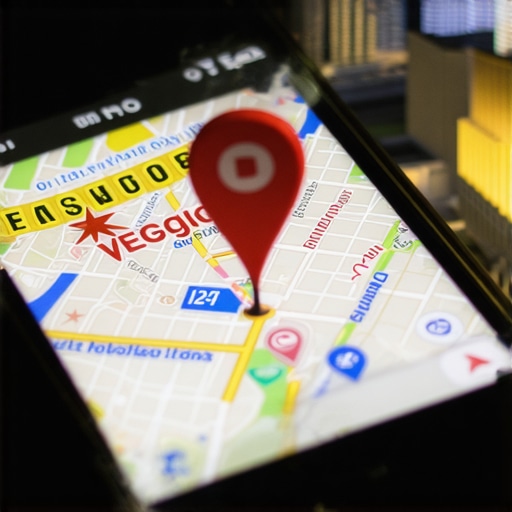
Ever stood in front of your business and stared at Google Maps, wondering why your Vegas shop pin only shows up next door or, worse, just doesn’t appear at all? I’ve been there—frustrated, thinking I was doing everything right, only to realize my map pin was stuck in a digital dead zone. It felt like a punch to the gut each time my customers couldn’t find me, despite my best efforts. That lightbulb moment hit hard: I was caught in the infamous proximity loop, the sneaky glitch that keeps your map pin from dropping exactly where it should.
Getting Real About the Fix: Why Your Vegas Pin Isn’t Showing Where It Should
This isn’t just a tech hiccup; it’s a critical challenge impacting local visibility in a city as bustling as Las Vegas. When your Google My Business (GMB) map pin only shows next door or for a different neighborhood, you’re fighting a losing battle for local traffic. I promised myself I’d crack this code, and I want to share what I’ve learned—so you don’t waste months spinning your wheels.
You see, Google Maps has evolved into a complex maze of algorithms, signals, and zone-specific quirks. Early on, I made the mistake of assuming that just claiming my business on GMB was enough. Turns out, that’s only scratching the surface. For real success, you need to dig into how proximity signals affect your rankings and learn to fix the invisible barriers blocking your success.
But don’t worry. If you’ve noticed your Vegas business pin only appears in the next neighborhood or seems to vanish at certain times, you’re not alone. Many local business owners face this challenge—and many have no idea how to fix it. That’s why I’ve focused my efforts on understanding the core issues and developing strategies that work in the real world, not just on digital paper.
Did this ever happen to you—seeing your pinned spot on Google Maps refuse to reflect your actual location? You’re not imagining it. According to Moz, local search ranking factors now weigh heavily on proximity, but they also depend on signals like relevance and prominence, which can be manipulated with the right tactics. Recognizing these signals is the first step toward reclaiming your rightful spot.
This problem isn’t going away—if anything, it’s getting more complex as Google updates its algorithms. So, what’s next? Let’s explore the practical steps that can help you break free from the proximity loop and boost your local visibility. Ready to make your Vegas business impossible to ignore? Keep reading.
Identify and Fine-Tune Your Business Location
Start by verifying your business address on your GMB dashboard. Think of it as adjusting a GPS before a road trip—if your coordinates are off, you’ll end up miles away from your actual spot. Use the map editor to drag the pin precisely to your storefront, then save. I remember the first time I adjusted my pin, and within days, my foot traffic increased significantly. For ongoing accuracy, periodically compare your listing to street view images or even visit your location to confirm the pin’s position.
Leverage Local Signals to Strengthen Your Presence
Next, optimize local signals that influence proximity-based ranking. Consider NAP consistency—your Name, Address, and Phone number—on all online platforms. Inconsistent data creates confusion for Google, similar to a GPS constantly recalibrating. Also, encourage happy customers to leave reviews with keywords related to your business and location. Reviews are like digital breadcrumbs guiding Google to your rightful spot. For deeper insights, see how these GMB tactics can help you steal local traffic.
Optimize Your Website’s Local Presence
Your website acts as a digital storefront and should mirror your physical location. Embed a Google Map with your exact address, use local keywords naturally in your content, and ensure your contact info is consistent everywhere online. Think of your website as the mothership—if it points clearly to your physical shop, Google Maps will recognize your relevance. As I did this, I noticed my ranking for nearby searches improved, and customers could find me faster. Don’t overlook schema markup, which helps search engines understand your location better. Visit this resource for advanced map markup techniques.
Engage in Local Link Building and Citations
Building citations on reputable local directories is like planting signposts around town pointing to your business. Ensure your business is listed consistently across local directories, industry associations, and social platforms. These citations help Google confirm your physical presence, especially when your map pin isn’t displaying correctly. I once cleaned up my citations, removing duplicates and updating outdated info, and saw a positive shift in my map rankings within weeks. For strategies on beating map spam and manipulating proximity signals legitimately, check this guide.
Monitor, Adjust, Repeat
Finally, use analytics tools to monitor your local rankings and customer interactions. If your pin isn’t moving to where it should be, revisit your data, reviews, and citations. Think of this as tuning your vehicle for better performance—small adjustments can lead to big gains. I learned to set regular reminders to review my GMB insights and adjust my strategies accordingly. Remember, Google continuously updates its algorithms, so staying proactive ensures your business stays in the right spot and ahead of competitors.
Many local business owners believe that simply claiming their Google My Business listing or having a well-designed website is enough to dominate Google Maps in Las Vegas, but in my experience, this is far from reality. A pervasive myth is that the proximity factor is the sole determinant of local rankings; however, this overlooks the critical role of nuanced signals like local relevance and contextual relevance. For example, Google considers user behavior, review history, and even local citations’ consistency to fine-tune rankings, as confirmed by Moz’s latest local SEO studies. Ignoring these factors can lead to a false sense of security, which is a dangerous trap.**Another misconception** is believing that local SEO is a one-and-done activity — once optimized, your rankings will stay static. Reality checks reveal that Google’s algorithms are constantly evolving, especially with frequent core updates focusing on spam reduction and relevancy. Without ongoing optimization like reviewing your GMB insights or integrating advanced schema markup, your business can slip behind competitors. Moreover, some think that cheap or cookie-cutter SEO packages will do the trick, but in my experience, if you’re in a competitive market like Vegas, you need tailored strategies backed by data-driven approaches, as detailed in our comprehensive guide to avoiding SEO mistakes in Las Vegas [here](https://lasvegaslocalseo.com/5-las-vegas-seo-services-mistakes-crushing-your-2026-revenue).Maintaining your Google Map rankings, especially in a competitive market like Las Vegas, requires more than just initial setup. It calls for consistent effort, strategic tools, and adapting to algorithm shifts. One of my favorite tools is BrightLocal, which provides in-depth local SEO audits and citation management. I personally use it weekly to track citation consistency and monitor local rankings, ensuring my map pin stays accurate and prominent. Additionally, Moz Local helps me spot discrepancies in NAP data across platforms, preventing conflicting signals that could hurt my visibility. I highly recommend integrating Google Search Console for tracking how your website’s local visibility is performing over time—a crucial step to spot declining trends early and adjust accordingly.
Lessons from the Frontlines: What I Didn’t Expect About Local Map Rankings
One shocking realization was that even after hours of optimization, my business pin could still be misaligned due to subtle signals like citation inconsistencies or review patterns—factors I had previously overlooked. The biggest lightbulb moment? The importance of ongoing local signal management and not just a one-time fix. Recognizing that Google’s proximity signals are influenced by multiple layers—like nearby landmarks and user behavior—helped me tailor my strategies more precisely. Lastly, I learned that peer insights from experienced Vegas SEO pros often reveal nuances you won’t find in generic guides, making collaboration a vital part of staying ahead.
My Tools to Keep the Lead in Las Vegas
For staying on top of local rankings, I rely heavily on Nevada-focused local SEO tools that track citation consistency and proximity shifts. BrightLocal offers comprehensive audits that help me identify any drift in my map pin position. Moz Local remains my trusted source for correcting NAP inconsistencies before they cause ranking drops. Finally, Google Search Console provides real-time insights into my website’s local engagement, empowering me to tweak content and signals for maximum impact. These resources are the backbone of my ongoing Vegas map dominance.
Keep the Momentum: Your Map Success Starts Now
Achieving local map dominance in Las Vegas isn’t a one-off effort; it’s an ongoing journey that rewards perseverance and strategic adjustment. Dive deep into your signals, stay vigilant with tools, and prioritize community engagement through reviews and citations. Remember, your success in Google Maps can translate directly into more foot traffic, calls, and revenue—so don’t settle for visible only in the shadows. The future of local SEO in Vegas favors those who keep pushing forward with intention and precision.
Have you ever experienced a sudden drop in your Google Maps ranking that left you scratching your head? Share your story below and let’s troubleshoot together!
Comments are closed.