The Brutal Reason Your Five-Star Reviews Aren’t Moving the Map Pin
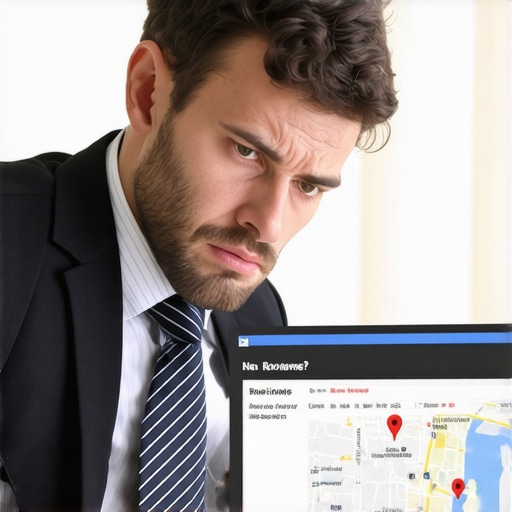
You’ve done everything the “gurus” told you to do. You’ve hounded your customers at the point of sale. You’ve printed QR codes on your business cards. You’ve sent follow-up texts until your thumbs were sore. And it worked – sort of. You have a 4.9-star rating with over 150 glowing reviews. Your competitors? They’re sitting at a 4.2 with maybe 30 reviews. Yet, when you search for your services, there they are, sitting pretty in the Google Map Pack, while your business is buried on page two or three. It feels like a glitch in the matrix, doesn’t it?
Section 1: The 5-Star Paradox
Welcome to the 5-Star Paradox. It’s the frustrating reality where “quality” as humans define it doesn’t align with “quality” as the Google algorithm defines it. Many business owners operate under the “Review Myth” – the dangerous assumption that the sheer volume of stars is the primary lever for google business profile seo. It isn’t. While reviews are a critical component of local search, they are not a magic wand that overrides the fundamental physics of the local algorithm.
If you spend any time on local SEO forums, Reddit, or Facebook groups for small business owners, you’ll see the same lament: “Why is the guy with three reviews and a disconnected phone number outranking me?” The brutal truth is that Google’s job isn’t to show the “best” business; it’s to show the most *relevant* and *accessible* business based on a complex web of signals. Research across thousands of listings shows that businesses with 50+ reviews are frequently outranked by “micro-competitors.” This happens because the high-rated business is often leaning on its reputation while ignoring the technical infrastructure required to rank google business profile listings effectively in a competitive landscape.
Section 2: The Trinity of the Local Algorithm
To understand why your stars aren’t moving the pin, you have to understand the three pillars of Local SEO: Proximity, Relevance, and Prominence. Google is very transparent about these, yet most businesses focus 90% of their energy on a small sliver of Prominence (reviews) and 0% on the rest.
- Proximity: How close is the searcher to your business?
- Relevance: How well does your profile match what the user is searching for?
- Prominence: How well-known is your business in the offline and online world?
While reviews fall under “Prominence,” they are only about one-third of that specific pillar. In recent years, Google has dialed up the weight of Proximity to an extreme degree. In a study of 23 diverse clients across various industries, we found that proximity acted as a “hard ceiling.” No matter how many reviews a business gained, if they were outside a specific geographic radius, they simply could not break into the Top 3. This is why a google maps ranking service is often necessary to bridge the gap between your physical location and your desired ranking area.
If you are trying to improve google maps ranking, you have to realize that Google views your business through a hyper-local lens. If your google business profile optimization strategy doesn’t account for the fact that proximity currently overrides almost every other signal, you are fighting a losing battle. You can have 1,000 reviews, but if Google thinks you are “too far” from the user, you’re invisible. This is where technical google maps seo becomes the differentiator between a popular business and a visible one.
Section 3: Why “Empty” Stars are Killing Your Rank
Not all reviews are created equal. In the eyes of an AI-driven algorithm, a five-star review with no text is essentially “empty calories.” It helps your average rating, but it does almost nothing for your google business profile ranking. Why? Because Google uses the text within reviews to determine Relevance.
This is what we call the “Friction Test.” Google’s Natural Language Processing (NLP) models scan your reviews for keywords and entities. If a customer leaves a review saying, “Great service!” it tells Google nothing about what you actually do. However, if a review says, “The best plumber in Las Vegas fixed my leaking water heater on a Sunday,” Google now has confirmed, third-party proof that you are relevant for those specific terms. This is a massive boost for google maps lead generation.
If your reviews are lacking this descriptive depth, you are missing out on the “relevance” signal. Furthermore, how you handle these reviews matters. To learn more about maximizing this impact, check out The Review Response Method That Actually Turns Angry Rants Into New Business. By responding to reviews with strategic (but natural) keyword usage, you reinforce your relevance to the algorithm. 100 “empty” stars will always lose to 50 detailed, keyword-rich reviews that confirm your business solves the searcher’s specific problem. This is a core tenet of effective local seo services.
Section 4: The Proximity Loop & The “Parking Lot” Effect
Have you ever checked your rankings while sitting at your desk, seen yourself at #1, and then driven two blocks away only to find you’ve vanished? This is the “Parking Lot” effect, and it is the result of the “Proximity Loop.” Google’s algorithm creates a tight radius around your verified address. Outside of that radius, the “Prominence” of your competitors begins to outweigh your “Proximity.”
The Proximity Loop is the reason Why Your Vegas Map Pin Only Shows Up in Your Own Parking Lot. If your google business profile seo is only optimized for your specific address and not for the surrounding neighborhoods, your visibility will remain tethered to your front door. To combat this, you need to use local seo tools to visualize your “ranking heat map.”
Using a google maps rank tracker allows you to see exactly where your “drop-off” point is. If you see that your rankings fall from #2 to #14 the moment you cross a major intersection, you know you have a proximity problem, not a review problem. To fix this, you need to expand your digital footprint through local content, neighborhood-specific landing pages, and geographically relevant backlinks. Relying on reviews alone to fix a proximity issue is like trying to use a megaphone to talk to someone three miles away; it’s the wrong tool for the distance.
Section 5: Beyond Reviews: Citations, Schema, and Backlinks
If reviews are the “Sentiment” signal, then Citations, Schema, and Backlinks are the “Technical Prominence” signals. A famous study by Sterling Sky noted that moving from 3 reviews to 16 reviews can provide a significant jump in rankings. However, once you hit a certain threshold, the “Review ROI” begins to plateau. At that point, your gmb ranking service must pivot toward technical infrastructure.
NAP Consistency: Your Name, Address, and Phone number must be identical across the web. Unstructured citations – mentions of your business on local blogs, news sites, or event pages – are often more powerful than traditional directory listings in 2026. If your local seo software shows discrepancies in your NAP data, Google loses trust in your location, and your “Prominence” score takes a hit.
Schema Markup: This is the “secret language” of search engines. Without proper LocalBusiness Schema, Google has to guess what your data means. With it, you are handing them a map. If you’re struggling with this, read The Schema Fix That Finally Puts Your Vegas Business on the Map. This technical step is often what allows a business to rank in google map pack results even when competitors have more reviews.
Local Backlinks: A link from the Las Vegas Chamber of Commerce or a local Nevada high school football team is worth more for your google maps seo than 500 “high DA” guest posts from generic sites. These links anchor your business to a specific geography, helping you increase google business profile visibility beyond your immediate neighborhood. Without these signals, your prominence is capped, regardless of your star count.
Section 6: 2026 Trends: The Future of the Map Pack
As we look toward the future, the algorithm is becoming even more sophisticated. We are moving into the era of AI-driven search (SGE – Search Generative Experience). In this environment, “Review Velocity” (how fast you are getting new reviews) is becoming more important than “Review Volume” (total count). A business that got 500 reviews in 2022 but only 2 in 2025 will be seen as “stale.”
Furthermore, Google is increasingly using “In-Store Activity” signals – data from users’ location history – to determine if people actually visit your business after searching for it. If you have 5-star reviews but no one is actually clicking “Directions” or “Call,” Google’s AI will flag the reviews as potentially disconnected from reality. To stay ahead, you must understand What the Upcoming 2026 Search Trends Mean for Your Local Nevada Business. The focus is shifting from “tricking” the algorithm with keywords to proving real-world utility and engagement. Using google maps performance tools will be essential for monitoring these engagement metrics.
Section 7: Conclusion & Action Plan
The brutal truth is that your five-star reviews are just the entry fee. They get you into the game, but they don’t guarantee a win. If you want to rank higher on google maps, you must stop obsessing over stars and start focusing on the technical trinity of Proximity, Relevance, and Prominence.
Your action plan is simple:
- Audit your current reach using a google maps rank tracker to identify your Proximity Loop.
- Optimize your review responses for relevance, not just politeness.
- Fix your technical Schema and citation errors.
- Stop begging for reviews and start building a local digital footprint.
Don’t let your business stay buried. It’s time to move the pin.